top of page


Doctor Preforming heart check on a child

We should everyone get high-quality healthcare in today's global society, regardless of income or location. In low-resource areas with inadequate diagnostic skills and medical facilities, the reality differs. Quick, accurate diagnostic tools may save lives in certain cases. Point-of-care (POC) diagnostic tools are transforming healthcare for poor populations, thanks to medical advances. 


Benefits of POC Diagnostics in Environments with Limited Resources

Quick Diagnostic Scabies Procedure

The speed at which POC diagnostics may provide results—often in a matter of minutes—is one of its main benefits. For situations like infectious illnesses like scabies or serious medical crises, when prompt care is needed, this quick turnaround time is essential.


Exam Decentralized

Decentralizing testing from laboratories to POC diagnostics brings healthcare closer to patients. Decentralization reduces sample transmission, speeding up patient treatment choices. 


Minimal Need for Infrastructure

Many POC diagnostic technologies are intended to be easy to use and portable, in contrast to conventional diagnostic techniques that need costly laboratory equipment and trained personnel. Certain gadgets function using battery power or disposable parts, which makes them perfect for use in environments with inadequate infrastructure.


Encourage Healthcare Professionals

POC diagnostics equip front-line healthcare workers with fast diagnostic tools. Reliance on centralized healthcare experts is decreased since nurses, community health workers, and even patients themselves may conduct tests and interpret data with little to no training.


POC Diagnostic Tool Examples

RDTs: Fast diagnostics

Simple, affordable RDTs detect blood, urine, or saliva infections or biomarkers. These tests identify dengue, HIV, and malaria in low-resource settings.


Moving Molecular Diagnostics

Molecular biology developments have enabled portable equipment to conduct complicated nucleic acid amplification tests (NAATs) at treatment. These technologies are sensitive and specific for bacteria, viruses, and parasites.


Smartphone Checkups

Smartphones' widespread use has led to innovative diagnostic solutions that use their connection and computer capacity. Diagnostic applications and attachments on smartphones let people test, evaluate, and submit data to clinicians remotely.


Lab-on-chip

Laboratory procedures on a microchip enable quick, automated biological material analysis. These devices can perform several tests with little material, making them attractive for infectious disease diagnosis in resource-constrained environments.


Challenges and Chances

POC diagnostic technologies may improve low-resource healthcare, but they must solve several issues. Maintaining test reliability, overcoming regulatory constraints, and integrating POC diagnostics into healthcare systems are these problems. These technologies must be affordable and available to underprivileged communities via sustainable financing channels.


  • Research and development to increase functionality, test capacity, and affordability give POC diagnostics a bright future despite these difficulties. Innovation and collaboration may improve point-of-care diagnostics and healthcare for the needy.


Equity and Access

POC diagnostics help bridge the healthcare gap between urban and rural, poor and affluent regions. These technologies provide fast and precise diagnosis at the treatment site for everyone, regardless of geography or socioeconomic position.


Region-specific responses

In the context of healthcare, there is no one-size-fits-all approach, particularly in places with low resources where there are significant variations in disease load, infrastructure, and cultural variables. POC diagnostic technology must to be flexible and adjustable in order to meet the unique healthcare needs of various populations. This might include creating testing for common illnesses in the area, designing user interfaces with language and cultural sensitivity, and making sure the system works with the way healthcare is currently done.


Monitoring and Reaction to Emergencies

Particularly in areas where newly developing infectious illnesses are likely to occur, point-of-care (POC) diagnostics are essential to disease monitoring and outbreak response operations. These techniques assist control outbreaks and stop their spread by facilitating early warning systems and prompt execution of public health treatments by allowing fast identification and characterization of pathogens at the point of care.


Chronic disease monitoring and control

At low-resource settings, infectious illnesses dominate healthcare, but chronic diseases like diabetes, hypertension, and cardiovascular disease are rising. POC diagnostic technology may help patients and clinicians follow illness progression, adapt medication, and avert problems in real time for chronic illnesses.


Education and Developing Capabilities

 POC diagnostics deployment effectiveness depends not just on technology availability but also on healthcare personnel's ability to utilize these instruments efficiently. To teach frontline personnel how to utilize POC diagnostic equipment correctly, evaluate test findings, and incorporate testing into clinical decision-making, training programs should be created. In addition, continuous support and quality control systems are necessary to guarantee the correctness and dependability of test findings throughout time.


Connectivity and Data Management

Large volumes of data are produced by POC diagnostic equipment, which may help guide research projects, public health regulations, and clinical decision-making. To secure patient privacy and facilitate diagnostic data collection, storage, analysis, and dissemination, strong data management systems are needed. Utilizing mobile and cloud-based technologies may also improve connection, allowing for real-time data transmission and decision assistance between POC diagnostic equipment, healthcare institutions, and public health authorities.


Economies of Scale and Sustainability

Studies have shown that POC diagnostic technologies might eventually result in cost savings by lowering healthcare expenses related with delayed or inaccurate diagnoses, needless treatments, and hospital admissions, despite the initial outlay being rather frightening. Moreover, elements like cost, scalability, and local ownership are crucial to the long-term viability of POC diagnostics. Governments, non-governmental organizations, business partners, and academic institutions must work together to guarantee that these innovations are widely adopted and continue to receive support.


Quality assurance and regulatory pathways

In order to design and use POC diagnostic instruments, regulatory clearance and quality control are essential. In order to guarantee that their gadgets fulfill global standards for performance, safety, and effectiveness, manufacturers have to negotiate regulatory processes. To reduce the possibility of mistakes and erroneous findings, strict quality control procedures should be put in place at every level of the testing process, from distribution and production to usage at the point of care.


Empowerment and Community Engagement

Finally, in settings with limited resources, community participation is essential to the effective adoption of POC diagnostics. Building trust, encouraging cultural sensitivity, and ensuring that treatments are tailored to the needs and goals of the community are all facilitated by including local populations in the planning, execution, and assessment of diagnostic programs. Long-term, more equitable and sustainable health outcomes may result from empowering communities to take charge of their healthcare via lobbying, education, and involvement in decision-making processes.


Conclusion

Point-of-care diagnostics may change low-resource healthcare with quick, decentralized, and economical testing. Rapid diagnostic testing, smartphone applications, and lab-on-a-chip technology are helping frontline healthcare providers improve patient outcomes globally. Even if there are limitations, investing in POC diagnostics research and use may improve healthcare access and equity.
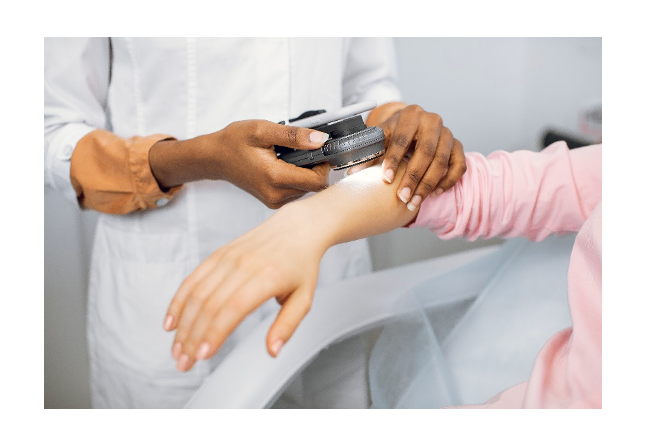

Dermatologist examines arm

Every year, millions of people worldwide are afflicted with scabies, a highly infectious skin condition brought on by the Sarcoptes scabiei mite. While recognizing distinctive skin lesions and symptoms is the mainstay of clinical diagnosis, laboratory testing and imaging modalities are also important tools for confirmation of the diagnosis, particularly when symptoms are unusual or equivocal. This article examines the several imaging modalities and laboratory tests that are used to confirm the diagnosis of scabies, highlighting the benefits, drawbacks, and emerging technology in the area.


Diagnostic Laboratory Tests for Scabies

Using a skin scraper and a microscope

By scraping the skin, samples of epidermal tissue are obtained using this conventional approach. The samples are then inspected under a microscope to check for the presence of fecal matter, eggs, or mites. Even though it is regarded as the gold standard for scabies diagnosis, there are some drawbacks, such as its invasiveness and fluctuating sensitivity, especially when there is little mite load or insufficient sample.


Dermoscopy

Using a portable equipment, dermoscopy allows for greater magnifications of the skin than is possible with the unaided eye. By helping to recognize distinguishing traits like burrows, mites, and eggs, it improves the accuracy of diagnosis. Dermoscopy is a useful diagnostic method for scabies because it is non-invasive and provides real-time imaging. This is particularly true in resource-constrained environments where microscopic investigation may not be easily accessible.


Polymerase Chain Reaction, or PCR

High sensitivity and specificity are provided in the diagnosis of scabies using PCR-based techniques, which amplify and identify certain DNA sequences of the scabies mite. When standard techniques provide conflicting findings or need to confirm a diagnosis in an epidemic that is suspected, this molecular approach comes in handy. PCR tests may be expensive and need certain tools and knowledge, which restricts their use in some situations.


Diagnostic Imaging for Scabies

Dermatoscopy

Dermatoscopy, also known as epiluminescence microscopy, is a portable light-based or non-polarized skin examination device. It helps identify scabies-specific tunnels, mites, and eggs by highlighting skin patterns and structures. Dermatoscopy, a fast, non-invasive outpatient treatment, aids clinical evaluation.


RCM: Confocal Microscopy of Reflectance

RCM is a cutting-edge imaging technology that provides real-time, high-resolution skin cellular imaging. It allows non-invasive observation of mites, eggs, and scabies-related inflammation, improving sensitivity and specificity over standard microscopy. RCM may detect scabies better, but its high cost and requirement for training may limit its adoption.


Sonography

Ultrasonography shows structures beneath the skin using high-frequency sound waves. It is seldom used to diagnose scabies, although studies has shown it may reveal tunnels and fluid accumulations. When other imaging methods are unavailable or inconclusive, ultrasonography may be employed non-invasively.


Doctor preforming a surgical procedure

Skin Biopsy

A skin biopsy may be carried out if the diagnosis of scabies is unclear or if results from other diagnostic techniques are not definitive. A microscopic examination of a tiny sample of skin tissue is performed to look for signs of scabies infestation, such as the presence of eggs, mites, or inflammatory changes. Skin biopsies are intrusive, but they provide histological confirmation of the diagnosis and may help distinguish scabies from other skin disorders that have similar clinical manifestations.


Tests for serology

Specific antibodies against scabies antigens in the blood are detected by serological tests such the indirect immunofluorescence assay (IFA) and enzyme-linked immunosorbent assay (ELISA). Primarily used in research environments, these examinations have the potential to support the diagnosis of scabies, particularly when other diagnostic techniques provide conflicting results. However, because of their inconsistent sensitivity and specificity, serological tests are not often used in clinical practice and have limited therapeutic usefulness.


The Scotch Tape Test

The Scotch tape test involves carefully removing clear adhesive tape that has been applied to skin lesions that may be scabies-infested. After that, the tape is scrutinized under a microscope to check for the presence of feces, eggs, or mites. The Scotch tape test is seldom used in clinical practice and may have lower sensitivity and specificity than skin scraping but is less obtrusive. It may be utilized in resource-constrained contexts when other diagnostic methods are unavailable.


Examining Wood's Lamp

The skin is subjected to UV light during Wood's lamp examination to discover scabies-related fluorescence patterns. Although simple and non-invasive, this method has low diagnostic accuracy and frequently produces false positives. Wood's lamp examination may detect burrows and guide additional scabies diagnostics, but it is not a standalone test.


Cytology

Cytological inquiry involves staining skin scrapings or fluid from skin lesions for microscopic examination. Cytology is not unique to scabies, although it may identify eggs, mites, or inflammatory cells that can confirm the diagnosis. When detecting secondary bacterial infections that complicate scabies infestation or when skin scraping is equivocal, cytological investigation may be very helpful.


IHC, or immunohistochemistry

Using certain antibodies, skin biopsy specimens are stained in immunohistochemistry in order to identify scabies antigens. IHC is mostly used in research settings, but it may also provide further assurance when diagnosing scabies, particularly when histology results are unclear. However, because of its high cost and complicated technical requirements, IHC is not often used in clinical practice.


Molecular Imaging

Novel molecular imaging methods, such positron emission tomography (PET) and fluorescence in situ hybridization (FISH), have the potential to see scabies mites and their metabolic processes in living organisms. Molecular imaging may provide non-invasive, real-time viewing of scabies infestation, enabling early diagnosis and therapy monitoring, even if it is still in the experimental phases. To confirm the clinical value of molecular imaging in the diagnosis and treatment of scabies, further investigation is required.


Digital imaging and telemedicine

With the development of digital imaging and telemedicine, it is now possible to diagnose scabies remotely. Dermatologists don't require in-person consultations to deliver prompt diagnosis and treatment recommendations since they may remotely evaluate high-resolution photos or videos of skin lesions taken by patients or healthcare professionals. Digital imaging and telemedicine may improve access to dermatological treatment even if they cannot replace conventional diagnostic techniques, especially in impoverished regions or during public health crises.


Both machine learning and artificial intelligence (AI)

Scabies and other dermatological disorders are being diagnosed with the use of AI-powered algorithms and machine learning approaches. These algorithms give automated diagnosis recommendations or decision assistance by analyzing clinical pictures, patient histories, and other pertinent data. AI-based diagnostic tools are currently in the early phases of research, but they have the potential to improve patient outcomes in the treatment of scabies, lower healthcare costs, and increase diagnosis accuracy.


Conclusion

Accurate diagnosis is essential for scabies treatment and control. Even while clinical examination is the main diagnosis, laboratory tests and imaging are still needed for confirmation, especially in complicated cases. Clinicians may diagnose scabies using skin scraping, microscopy, PCR, and reflectance confocal microscopy. Technology and research may enhance accessibility and diagnostic accuracy, improving treatment of this common but often overlooked skin illness. 


Updated: Aug 21, 2024


Dermatologist inspecting patients back

Modern medicine struggles to diagnose scabies. For many reasons, clinicians fail to detect this parasitic illness caused by the Sarcoptes scabiei mite, which affects millions globally. We investigate the intricacies that complicate scabies diagnosis in this article.


Problems diagnosing

Variety of Delivery

Scabies has several clinical manifestations, making diagnosis one of the hardest medical jobs. Allergic reactions, dermatitis, and eczema may mimic the symptoms. Clinicians may misdiagnose scabies, prolonging treatment.


Exams diagnostic

Scabies is usually diagnosed by microscopic analysis of skin scrapings for mites, eggs, or feces, however this method is not always reliable. In persons with low parasite burdens or spreadable pathogens, mites may be hard to find. 


Unusual Situations

Scabies may also present atypically, which makes diagnosis much more difficult. Atypical presentations, which differ from the conventional symptoms and display changed clinical characteristics, such as crusted (Norwegian) scabies or scabies incognito, may be confusing to medical professionals and cause a delay in an appropriate diagnosis.


Intermittent Symptoms

Many other dermatological disorders have symptoms with scabies, including redness and itching. It might be difficult to distinguish scabies from its imitators alone on the basis of clinical symptoms, which calls for a thorough investigation and differential diagnosis.


Misreading of Indications

Diagnostic mistakes may occur when some telltale indications of scabies, including excoriated papules and burrows, are mild or missed. These diagnostic hints may go unnoticed by inexperienced practitioners or those who are not knowledgeable with scabies, leading to lost chances for care.


Techniques for Getting Past Diagnostic Obstacles


Enhanced Inferior Suspicion

Increased vigilance and suspicion about scabies may aid in prompt diagnosis. Physicians have to have a high degree of suspicion, especially when people arrive with similar symptoms or in areas where scabies outbreaks are known to have occurred.


Taking a Complete History

Scabies diagnosis may be aided by obtaining a thorough medical history that includes recent exposures, travel history, and symptom development. You should be suspicious about scabies if you have questions about pruritus becoming worse at night, family members who have the same symptoms, or recent contact with infected people.


Dermoscopy

Scabies diagnosis may be aided by dermoscopic examination, a non-invasive method that visualizes skin structures. Triangular mites and serpiginous burrows are two distinctive dermoscopic characteristics that may help distinguish scabies from its differential diagnosis and improve diagnostic accuracy.


Tests for Molecular Diagnostics

Recent developments in molecular diagnostics provide sensitive and precise ways to identify scabies infestations. Examples of these approaches include polymerase chain reaction (PCR) tests that target scabies DNA. Even in situations with modest mite loads, PCR-based assays may provide a fast and reliable diagnosis by overcoming the

constraints of classical microscopy.


Working together and consulting

Working together with dermatologists or infectious disease experts may help ensure correct diagnosis and treatment in complicated or difficult situations. In instances that are challenging to diagnose, speaking with knowledgeable colleagues or using teledermatology services might provide further insights and direction.


Patient Instruction

Giving patients information about scabies may help with diagnosis and early detection. By educating people about the common symptoms, mechanisms of transmission, and preventative measures, scabies infestations may be identified early on and treated swiftly, allowing for timely intervention and stopping the disease's spread.


Evaluation of the Environment

Finding the causes of scabies transmission and putting targeted control measures in place may be facilitated by conducting environmental evaluations in high-risk environments, such as hospitals and communal living areas. By identifying fomites, infected people, and possible Sarcoptesmite reservoirs, epidemic risks may be reduced and preventative measures can be implemented.


Get in touch with tracking

Performing comprehensive contact tracing may help uncover further patients and break the chain of transmission in suspected scabies outbreaks or clusters. The scope of epidemics within communities or institutions may be reduced and secondary transmission can be avoided by identifying close contacts and administering the proper preventive medication.


Diagnostic Differentiation

It's essential to understand the differential diagnosis of scabies in order to prevent misdiagnosis and guarantee proper treatment. In situations when clinical characteristics are unusual or unclear, clinicians should evaluate alternate diagnoses such as bedbug bites, allergic responses, and fungal infections.


Reaction to Treatment

Keeping an eye on how the scabies treatment is working might provide important diagnostic data and validate the original diagnosis. Scabicidal drug therapy results in the elimination of mites, resolution of skin lesions, and improvement in symptoms, all of which confirm the diagnosis of scabies and verify the selected therapeutic strategy.


Taking Culture Into Account

Cultural customs and beliefs may affect how scabies is seen and presented, which may affect the results of a diagnosis. Gaining an understanding of cultural viewpoints on skin problems, cleanliness habits, and healthcare-seeking behaviors may help to improve diagnosis accuracy, foster more effective communication, and build rapport with patients.


Public Health Monitoring

Allocating resources and developing public health treatments may be influenced by surveillance systems tracking the incidence and trends of scabies. To identify susceptible individuals and direct focused preventive and control efforts, epidemiological data on the incidence, demography, and geographic distribution of scabies may be gathered.


Investigation and Originality

To overcome the diagnostic issues associated with scabies, further research is needed into innovative diagnostic techniques, treatment drugs, and prevention measures. Funding research projects aimed at increasing accessibility, scalability, and diagnostic accuracy may expand our knowledge of scabies and improve clinical treatment techniques.


International Cooperation

International engagement and cooperation are necessary due to the transnational nature of scabies as a health problem. Global scabies burden reduction, innovation, and cooperation in scabies control initiatives may be achieved via the exchange of best practices, surveillance data, and research results across nations and regions.


Conclusion

Scabies diagnosis is still a clinical mystery with many unanswered questions. Scabies infestations must be identified using a multimodal strategy that includes clinical suspicion, comprehensive investigation, and use of modern diagnostic modalities due to a variety of clinical presentations and diagnostic constraints. Healthcare professionals may improve their capacity to identify and treat this common but elusive parasite infection by learning the subtleties underlying the diagnosis of scabies and putting focused tactics into practice.


bottom of page